How It Works
From forest treatments to grazing plans, irrigation systems, and in-stream restoration, our Wildlife Habitat Biologists identify, develop, and implement projects that are the best fit for both the landowner's goals and regional wildlife needs. We build trust with landowners through workshops, outreach, and neighbor connections. We connect landowners with funding to support management and restoration projects, leveraging NRCS Farm Bill dollars, state, and foundation funds to support project costs.
Habitats We Work In
Habitat, our home or environment, is essential for all living things to thrive. Bird Conservancy believes that the best stewards of the land and habitat are those who rely on it for their livelihoods. Our projects are driven by resource concerns identified by private landowners, land managers, and resource professionals with an aim towards improving wildlife habitat while simultaneously supporting communities. Below, we have highlighted several projects that demonstrate how working lands can support habitat for wildlife in various landscapes.
Forests
Approximately 30 percent of Colorado’s forests are privately owned. In addition to sustaining critical watersheds, these forests serve as habitat for the state’s wildlife, support agricultural activities, and provide numerous ecosystem benefits. These forests are also increasingly threatened by uncharacteristically severe wildfires, pests and disease outbreaks, and fragmentation. Our biologists work with private forest landowners to mitigate the risk of wildfires, enhance wildlife habitat, and improve overall forest health and function. They provide technical assistance to landowners on forest management and leverage funding sources to implement forest restoration projects.
Ponderosa Pine Restoration
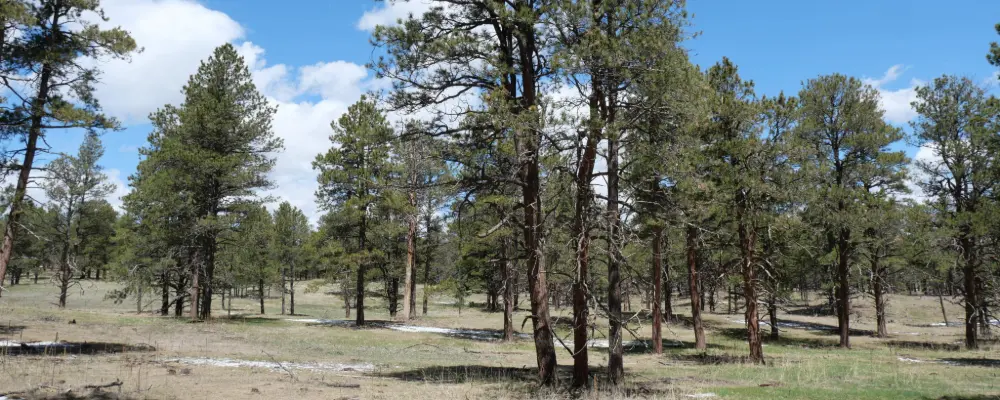
On the eastern slopes of the Spanish Peaks in Las Animas County, we are working with a landowner to restore a ponderosa pine stand. The sheer number of old growth ponderosa pines on this property is rare, as much of the area was logged ~100 years ago. This forest evolved to have surface fires approximately every 10-60 years. The presence of these old trees helps to show the historic spacing of the ponderosa trees before fire was removed from the system. With fire suppression, this stand has become overly dense with young, even-aged trees, which has led to more severe fire conditions. The wildlife in this area are adapted to a frequent fire regime and many species require the more open structure and breaks in the canopy that would historically exist in this forest. These openings allow the growth of grasses, forbs and shrubs, thus supporting greater numbers of flora and fauna in the understory. The forest management plan we are developing will open up the forest to restore these habitat elements and surface fire conditions. This will improve overall forest health, wildlife habitat, and reduce the risk of severe wildfire.
Grasslands
The Great Plains is a mosaic of tribal, private, and public land. With over 80% of remaining grasslands in the United States under private management, collaboration is vital to successful grassland conservation. Grasslands in the Great Plains are often managed for cattle production, and these rangelands are crucial habitats for grassland birds and other wildlife that depend on livestock grazing to maintain habitat structure and support for life. However, grasslands today face many management challenges, including encroachment of woody plants, disruption of natural disturbances like fire and grazing, and the invasion of non-native species like cheatgrass. Our biologists offer numerous options to help landowners and managers with their operations, benefiting wildlife habitats. These include practices such as prescribed grazing, wildlife-friendly fence upgrades, invasive species management, and restoring marginal cropland to native grasslands.
Eastern Red Cedar Removal
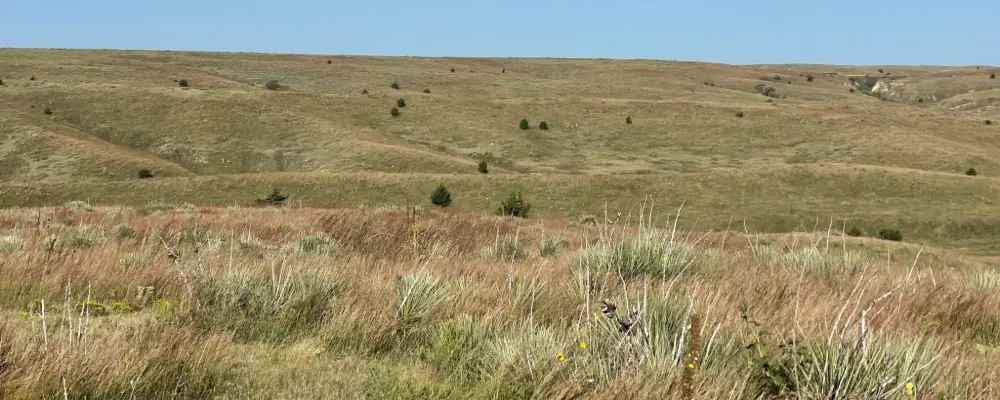
Eastern red cedar encroachment has expanded across Nebraska grasslands for decades and is one of the greatest threats to grassland birds and rangeland production. Our biologist in southwest Nebraska recently worked on two projects to restore 3,837 acres of mixed grass prairie grasslands. The sites are dominated by native warm-season grasses with scattered eastern red cedar trees encroaching. These are privately-owned working rangelands where the landowners implemented rotational grazing to promote variable vegetation structures benefitting grassland birds such as, Grasshopper Sparrows, Lark Buntings, Western Meadowlarks, Upland Sandpipers, and Greater Prairie-Chickens. These landowners recognized the cedar invasion threat early and we provided funds from the Nebraska Game and Parks Commission. It was exciting to see two neighbors collaborating to address a major grassland threat, due to their collaboration, work was completed in only three months. Our biologist’s effort to reach out to landowners has generated immense interest in grassland conservation.
Shrublands
The sagebrush landscape of the intermountain west is a mosaic of habitats, including sagebrush steppe, desert shrublands, riparian areas, woodlands and grasslands. More than 50 percent of this landscape is privately owned, and it is critical habitat for both livestock and many species of birds, including the endangered Gunnison sage grouse. Our biologist in Gunnison works with farmers/ranchers and partners organizations to implement a variety of restoration projects that promote resilient rangelands for both people and wildlife.
Improvements to Gunnison Sage-Grouse Habitat
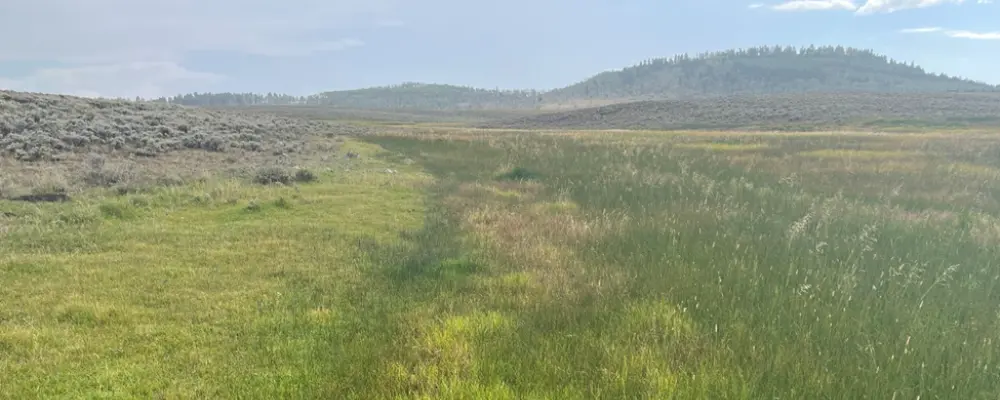
Bird Conservancy of the Rockies has been working with Ute Mountain Ute Tribe to improve grazing management for Gunnison Sage-Grouse (GUSG) habitat in Gunnison County, Colorado. The ranch is on the western edge of GUSG habitat within the Gunnison Basin and has four leks (breeding grounds) for grouse as well as relatively high elevation and mesic habitat that has excellent potential for brood-rearing. However, the ranch has historically used a four-acre pasture rotation throughout the summer season and cattle tended to camp out down in the drainage bottoms where brood rearing typically occurs. While the Tribe was interested in improving grazing management, they did not want to increase fencing on the ranch due to concerns about wildlife entanglement and collision risk. The project, funded by Natural Resources Conservation Service, uses range riding and drift fences to manage cattle across the 18,000-acre ranch. Therefore, the best solution was to design a range-riding program where cowboys actively push cattle out of drainages and onto the hillsides. This allows for more vegetation recovery within the drainage bottoms, providing better cover and higher insect abundance for chicks during the brood-rearing period. In a single year, this has already improved cover and height of vegetation and slowed erosion in drainage bottoms.
Wetlands
Wetlands and riparian areas (the habitats adjacent to rivers and streams) are some of the most valuable habitats for wildlife, and over 75% of the wildlife species in Colorado rely on these ecosystems at some point in their life cycles. Water in the west is in high demand, and without careful planning, wetlands and riparian areas can go dry and lose their immense habitat value. Our wetlands biologists focus on finding those management and infrastructure solutions that keep wetlands wet at key times of the year to benefit wetland species, while maintaining and improving the operations of the private landowners who manage them. This can include updating flood irrigation systems, adjusting irrigation timing and duration, stabilizing streambanks, and reconnecting streams to their floodplains.
Wetland and Riparian Management

In 2024, Bird Conservancy partnered with two landowners in northeastern Colorado, Colorado Parks and Wildlife, Natural Resources Conservation Services, and Ducks Unlimited on a large-scale slough project that restored over 35 acres of riparian habitat, opened 2 miles of slough habitat and incorporated beaver coexistence structures that increased wetland connectivity. Sloughs are shallow, slow-flowing side channels adjacent to rivers. Along the South Platte River, they are often disconnected from surface water in the river and are supplied by warmer groundwater, so they typically remain open longer during cold winters. This provides essential habitat for wildlife including migratory birds, overwintering waterfowl, shorebirds, and other wildlife. Over time, sloughs fill in with sediment and become overgrown with cattails and willows. Restoration of these systems involves dredging out excess sediments and removing encroaching vegetation to promote open water. Not only do these projects benefit birds, they aid landowners in increasing their groundwater retention, leading to greener, more productive landscapes.